


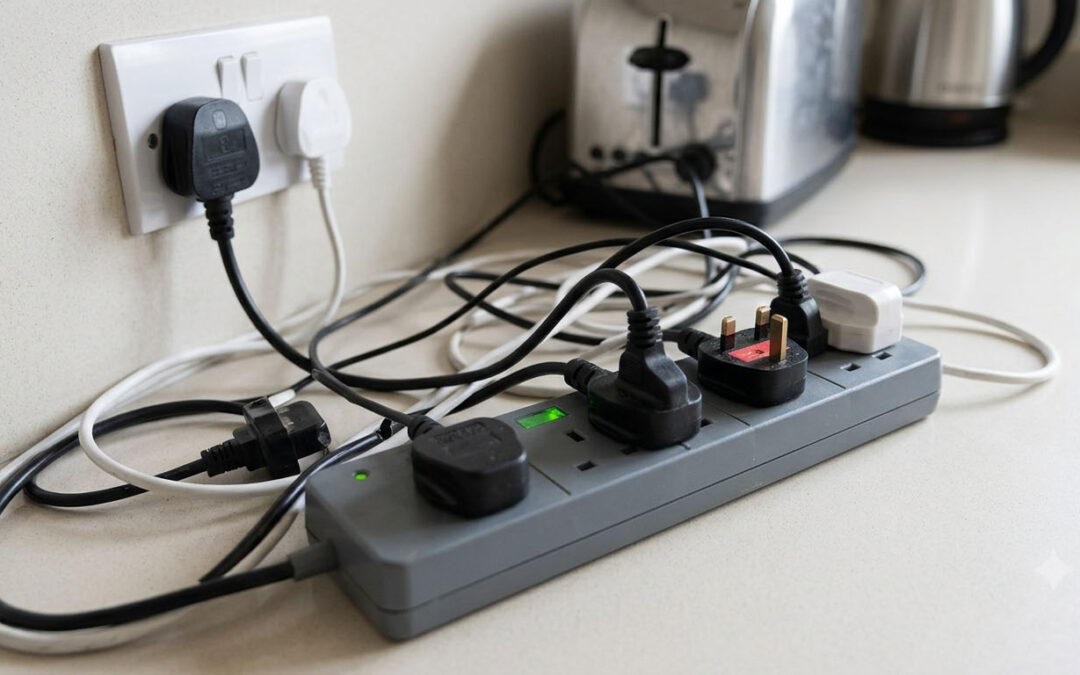
Don’t Mistreat Your Electrical Sockets and 4-Gang Extension Leads
Essential Electrical Safety Advice from Kent Electricians E-Lectrix
Electrical sockets are such an ordinary part of everyday life that it is easy to forget just how important it is to use them correctly. We plug in televisions, computers, kettles, chargers, kitchen appliances and countless other devices without giving the socket itself much thought.
The problem arises when we expect one socket to provide power for more equipment than it was designed to handle. A shortage of conveniently located sockets can quickly result in a collection of adaptors and 4-gang extension leads around the home. While extension leads are useful when used appropriately, they shouldn’t become the permanent answer to an inadequate number of wall sockets.
At E-Lectrix, professional electricians in Kent, we regularly help homeowners improve their electrical installations and make their properties safer and more suitable for modern living.
So, are you treating your sockets and extension leads properly? Here are some of the most important things every homeowner should know.
Why Overloading Your Electrical Sockets Can Be Dangerous
One of the biggest mistakes people make is assuming that because an extension lead has four sockets, it is automatically safe to use all four at the same time.
That isn’t necessarily the case.
Different electrical appliances require very different amounts of power. Four relatively low-powered devices may present a very different electrical load from several high-powered appliances.
Most extension leads are rated at a maximum of 13 amps, although some older products may have lower ratings. If the combined demand from the appliances exceeds the extension lead’s maximum rating, it can overheat.
Overheating electrical equipment isn’t something to dismiss. It can damage the extension lead, plug or wall socket and, in serious circumstances, contribute to an electrical fire.
This is why homeowners should always check the rating of an extension lead and consider the appliances being connected rather than simply filling every available socket.
Understand What Your 4-Gang Extension Lead Can Handle
A 4-gang extension lead can be incredibly convenient. It allows several devices to be powered from a single wall socket and can be particularly useful around televisions, computers and home entertainment equipment.
However, four available spaces do not mean four high-powered appliances should automatically be connected.
The important figure is the total electrical load being placed on the extension lead.
High-powered appliances such as kettles, heaters, irons and some cooking appliances can use a substantial amount of electricity. Connecting several high-demand appliances to one extension lead can quickly push it beyond its safe operating limit.
Whenever you use an extension lead, check its maximum rating and the power requirements of the equipment you intend to connect.
If you’re constantly having to calculate what can safely be plugged in or regularly swapping appliances around, there’s probably a better long-term solution: having additional sockets professionally installed.
Never Daisy-Chain Extension Leads
One practice that should always be avoided is plugging one extension lead into another, commonly known as daisy-chaining.
It can be tempting when a wall socket is too far away or when you’ve run out of spaces on your existing extension lead. However, connecting extensions together does not increase the amount of electricity that can safely be drawn from the original wall socket.
Instead, you’re potentially adding more appliances and increasing the electrical load being supplied through one point.
Daisy-chaining can also leave cables trailing around the room, creating additional trip hazards and putting unnecessary physical strain on plugs, leads and sockets.
If you regularly need multiple extension leads to power equipment in one area of your home, speak to a qualified electrician about installing additional permanent sockets.
Don’t Ignore a Socket That Feels Hot
Your electrical sockets shouldn’t become noticeably hot during normal use.
If a plug, socket or extension lead feels unusually warm or hot, stop using it and investigate the cause. Heat can indicate excessive electrical demand, a poor connection, deterioration or another fault that requires attention.
Other warning signs include scorch marks or discolouration around a socket, a smell of burning plastic, buzzing or crackling noises, sparks and damaged plugs or cables.
You should never assume that these symptoms will simply disappear.
If you notice anything unusual, stop using the affected equipment and arrange for the installation to be inspected by a qualified electrician. Identifying a fault early could prevent a much more serious electrical problem developing.
Treat Your Wall Sockets with Care
Overloading isn’t the only way electrical sockets can be mistreated.
Sockets can become damaged through years of use, particularly when plugs are repeatedly inserted and removed roughly. Pulling a plug out using its cable rather than gripping the plug itself can also damage the cable and connections over time.
Heavy plug-in adaptors can place additional physical strain on wall sockets, particularly when several plugs and cables are hanging from them.
Furniture can cause problems too. Pushing a sofa, cabinet or bed tightly against a plug can bend cables or damage plugs and socket outlets. Cables should have enough space to sit naturally without being crushed or sharply bent.
Your sockets are designed to provide years of safe service, but that doesn’t mean they should be taken for granted. Treat them carefully and pay attention when something doesn’t look, sound or feel right.
Check Your Extension Leads Regularly
Extension leads can gradually become damaged, especially when they’re frequently moved between rooms or stored away between uses.
Before using an extension lead, take a few moments to inspect it.
Look at the cable for cuts, splits, fraying or areas where the outer insulation has been damaged. Check the plug and extension housing for cracks, scorch marks, melted plastic or other visible deterioration.
If an extension lead shows signs of damage, replacing it is considerably safer than attempting a temporary DIY repair.
Electrical tape isn’t a suitable long-term repair for a damaged extension lead. If the cable or casing has deteriorated, replace the product with a suitable extension lead from a reputable retailer.
Be Particularly Careful with High-Powered Appliances
High-powered appliances deserve particular attention because they can place a considerable load on an electrical circuit.
Portable heaters are a good example. Plugging a powerful heater into an extension lead alongside several other devices could potentially overload the extension.
The same caution applies to appliances such as kettles, irons and other equipment with high power requirements.
Where possible, high-powered household appliances should be connected directly to an appropriate wall socket rather than sharing an extension lead with several other devices.
If the position of your sockets makes this difficult, don’t make extension leads a permanent workaround. Additional sockets can often be installed in much more convenient locations.
Don’t Run Electrical Cables Under Carpets or Rugs
Trailing extension leads aren’t particularly attractive, so hiding them underneath a carpet or rug may seem like an easy solution.
However, this can create another problem.
Repeatedly walking over a concealed cable can damage its protective insulation. Hiding a cable also makes it much harder to notice deterioration, while covering electrical cables can affect their ability to dissipate heat.
Instead, consider whether the furniture can be repositioned or whether additional wall sockets could be installed closer to where electricity is actually required.
A well-planned electrical installation shouldn’t require cables to be stretched across rooms or hidden underneath floor coverings simply to reach a socket.
Take Extra Care with Extension Reels
Cable reels are particularly useful for DIY projects, gardening and situations where electricity needs to be provided some distance from the socket.
However, extension reels require careful use.
When significant power is being drawn through a cable reel, the cable should be fully unwound in accordance with the manufacturer’s instructions. Electricity passing through a tightly wound cable can generate heat, potentially causing the reel to overheat.
The maximum safe load of a cable reel may also differ depending on whether it is wound or fully unwound.
Always read the manufacturer’s instructions and check the product’s stated electrical rating before use.
Extension Leads Shouldn’t Be Your Permanent Solution
Extension leads are incredibly useful, but the clue is in the name: they’re intended to extend access to a power supply when required.
If every room in your home contains permanently connected extension leads, it may indicate that your property simply doesn’t have enough sockets for the way you live today.
This is particularly common in older Kent properties. Homes built decades ago weren’t designed around today’s collection of televisions, laptops, gaming systems, smartphones, smart speakers, kitchen gadgets and home office equipment.
Rather than adding another extension lead, consider having additional sockets installed.
A qualified electrician can assess the existing circuit, determine whether additional outlets are appropriate and position new sockets where they’ll actually be useful.
Are Your Sockets Keeping Up with Modern Living?
Our electrical habits have changed enormously.
A bedside table might now need power for a phone, smartwatch, tablet and lamp. A home office could require sockets for monitors, computers, printers, routers and chargers. Meanwhile, the area around a television may contain streaming devices, games consoles, sound systems and broadband equipment.
If your home was designed when these devices simply didn’t exist, it’s hardly surprising that you find yourself reaching for extension leads.
Adding well-positioned double sockets can make rooms more practical, reduce clutter and help eliminate unnecessary reliance on extension leads and adaptors.
Modern sockets incorporating USB or USB-C charging connections may also be worth considering in suitable areas, particularly bedrooms and home offices.
When Should You Call an Electrician About a Socket?
Some electrical warning signs should never be ignored.
If your socket is getting hot, showing scorch marks, producing a burning smell, buzzing or crackling, or intermittently losing power, stop using it and arrange for it to be inspected.
You should also consider speaking to an electrician if circuit breakers regularly trip when particular sockets or appliances are being used.
The problem might be relatively straightforward, but electrical faults are not something you should attempt to diagnose through trial and error.
A professional electrician can test the installation, locate the cause and recommend an appropriate repair.
Why Adding More Sockets Can Be the Better Solution
If extension leads have become permanent fixtures around your home, installing additional sockets could provide a safer and much more convenient alternative.
The best location and number of sockets will depend on the room, your existing electrical installation and how you use the space.
For example, additional sockets around a television area can accommodate entertainment equipment, while extra sockets around a home office can eliminate the need for overloaded multi-way adaptors. Bedrooms can benefit from conveniently positioned bedside sockets, while kitchens require careful planning to accommodate modern appliances.
It’s also worth thinking ahead. Installing slightly more capacity than you currently need can make your home better prepared for new technology and changing lifestyles.
Let E-Lectrix Help You Say Goodbye to Extension Lead Clutter
If you’ve got 4-gang extension leads everywhere because your home doesn’t have enough electrical sockets, you don’t necessarily have to live with them.
At E-Lectrix, our professional Kent electricians can assess your existing electrical installation and recommend practical solutions for adding sockets where you need them most.
Whether you’re looking to replace a damaged socket, add additional double sockets, modernise existing outlets or investigate a potential electrical fault, we’ll make sure the work is completed safely and professionally.
E-Lectrix provides a wide range of electrical installation and repair services for homes and businesses across Kent, with fully qualified electricians and a focus on safe, efficient workmanship.
Give Your Electrical Sockets the Respect They Deserve
Sockets and extension leads may be everyday household items, but they handle electricity every time you use them. Treating them carelessly, overloading them or ignoring signs of damage can create unnecessary risks.
Remember that having four spaces on an extension lead doesn’t mean you can connect any four appliances without considering their combined electrical demand. Don’t daisy-chain extensions, don’t ignore damaged cables or overheating sockets, and don’t rely on extension leads as a permanent substitute for adequate wall sockets.
If your home needs more power outlets or you’re concerned about the condition of an existing socket, E-Lectrix is here to help.
Contact E-Lectrix today
Call 01227 920196 or 07860 482516
info@e-lectrix.com